San Pa Tong 1
สันป่าตอง 1Published harvest timing
130–135 days
Planning focus
Read guide ↗Keep nursery age and time in the field separate.
Start with a variety. Understand its stages. Make the next fertilizer review more useful.
Start with ten source-linked profiles. Compare harvest timing, growing regions and the details that matter when planning the crop.
10 varieties
130–135 days
Keep nursery age and time in the field separate.
121–130 days
Nitrogen response is a reason to review the split, not to increase it automatically.
104–126 days
Keep the wide maturity window in your plan.
Around 25 November in the source setting
Plan around day length as well as crop age.
Around 21 November in the source setting
Start with the seasonal calendar and exact seed identity.
Wet direct seeding: 111 days; Transplanting: 118 days
Choose the establishment method before comparing crop ages.
105 days
Review nitrogen and disease risk together.
95 days
Fit a short crop into the whole farm calendar.
Wet direct seeding: 104–107 days; Transplanting: 112 days
Keep the planting window and nitrogen rate in view.
119–121 days
Prepare for harvest before grain starts to shatter.
No matching variety in this collection. Try another name or browse the ten profiles.
Harvest ages retain the source’s timing basis. Published yields belong to their reference conditions; they are not a forecast for your field.
Read the variety first. Then connect crop stage and fertilizer timing.
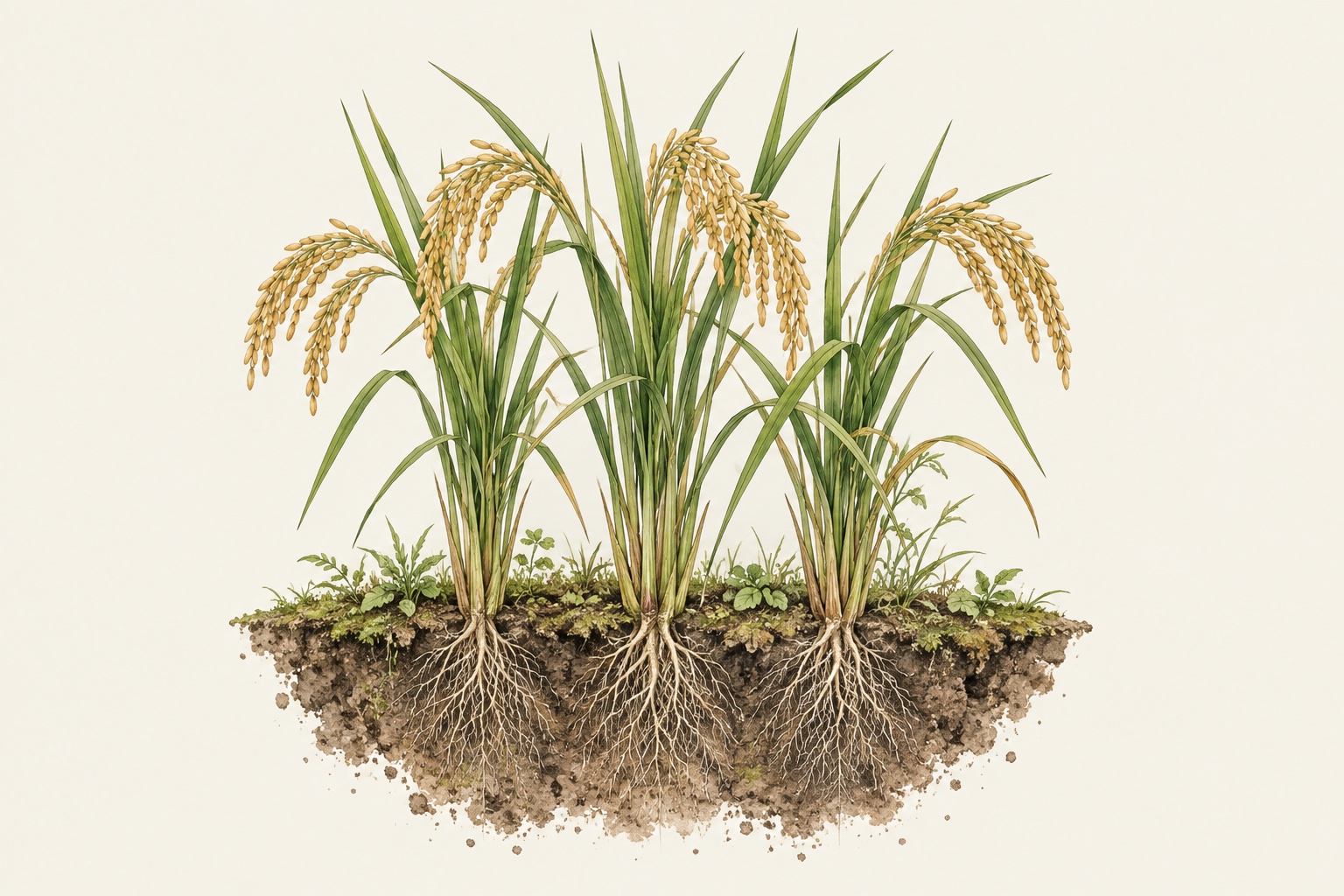
Growing areas, harvest age and the details that matter when planning this Thai glutinous rice.
Read the variety guideMake sense of growth stages, days after planting and the heat your crop has accumulated.
Understand the stagesConnect crop demand, previous applications and field conditions before the next split.
Explore nitrogen timing
Your variety, sowing date, field observations and actual inputs make a local review more useful. Keep those records together in Hypha.
Book a Hypha demo