A clearer plan for every block.
Keep field conditions, input programmes and application records together across your farm.
The next block may need a different decision.
Different planting dates, drainage and previous inputs can change what a crop needs. Hypha helps your team review each block without losing sight of the wider programme.
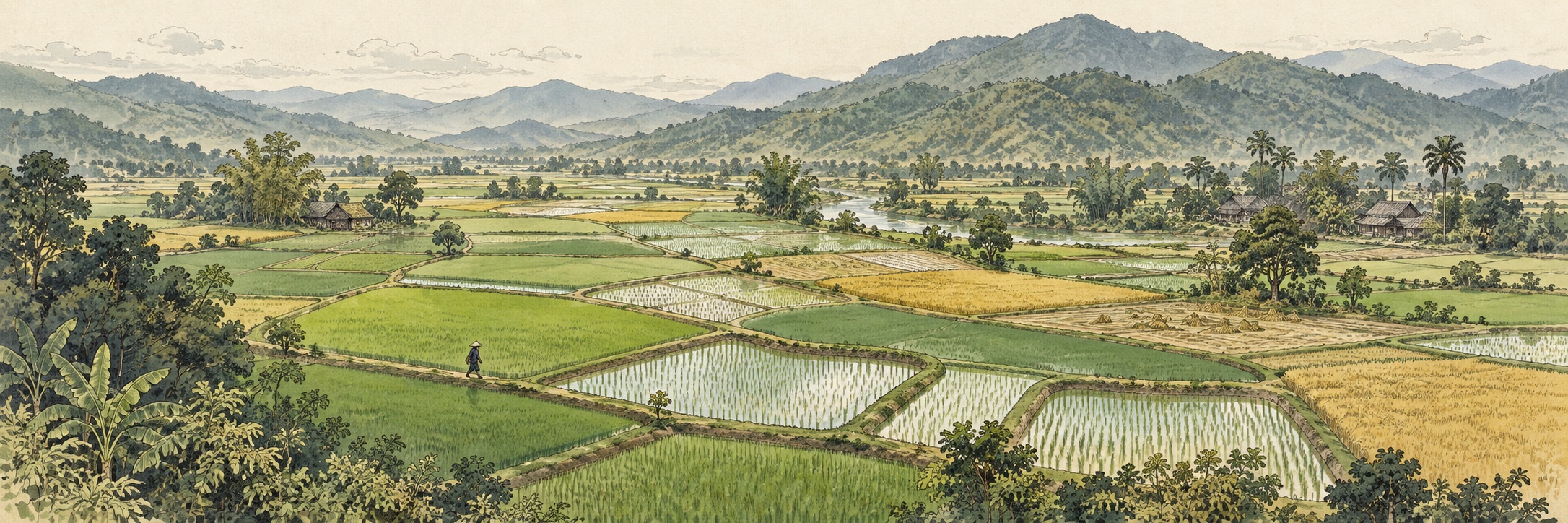 Conceptual illustration
Build the field record
Map blocks and record variety, establishment, water management and the soil tests you have.
Organize the next operation
Review the planned application beside crop stage, previous inputs and available weather. Record the actual amount and date.
Assess a change on selected blocks
Keep a comparison when reducing inputs or introducing another practice. Follow the crop through harvest before extending it.
Block areas, crop dates, fertilizer schedules and available soil and harvest records.
A shared crop-management record for the farm manager, field team and agronomist.
Crop coverage and data availability vary. The demo establishes what Hypha currently supports for your farm.
Keep a useful comparison when changing inputs →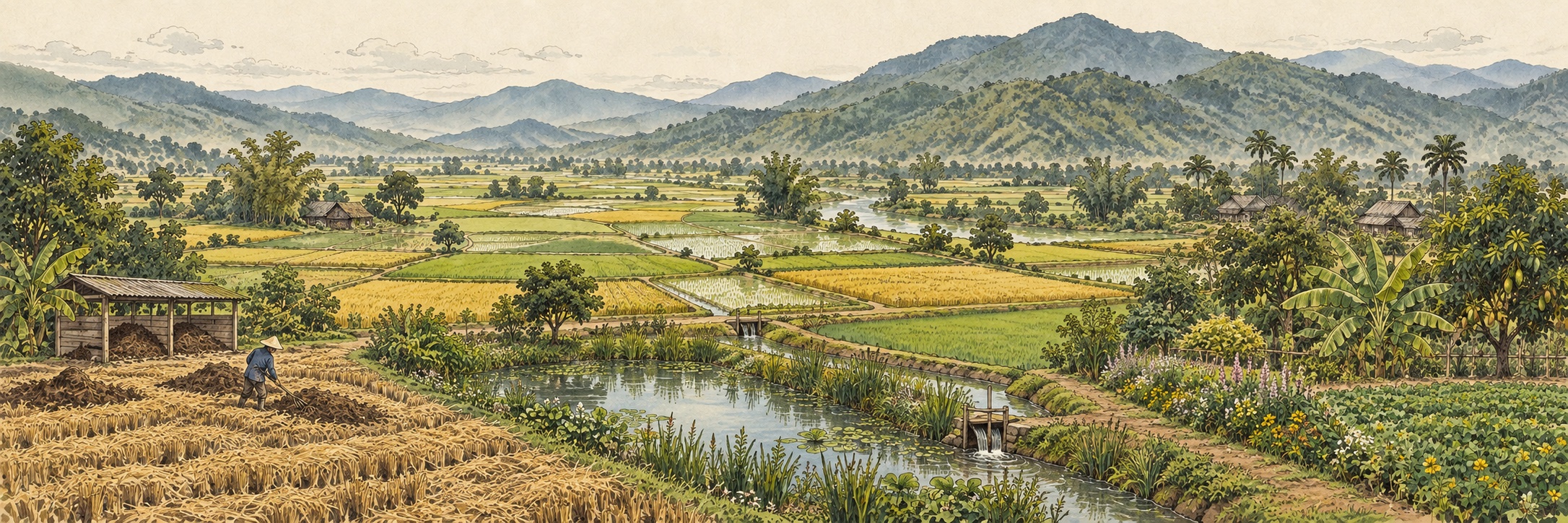
Return fertility
Bring crop residues back into the nutrient cycle through suitable composting and residue management. Account for their nutrients alongside fertilizer, and follow soil changes over time.Read the IRRI research ↗
Work with water
Connect irrigation to crop stage and rainfall. Where water control allows, assess alternate wetting and drying with field-water monitoring and reliable re-irrigation; protect the crop around flowering.Explore IRRI’s water guidance ↗
Make room for life
Look beyond the crop rows. Suitable flowering field margins can provide food and shelter for natural enemies of rice pests. Choose locally appropriate plants and monitor what changes.Explore IRRI’s field research ↗
Regeneration
Integrate cover crops, rotations, residue return and water management into your production calendar. Match each practice to the block’s soil, drainage, available water and time between crops. Start with selected blocks; compare soil health, yield, input costs and operational fit before expanding across the farm.See IRRI’s work on rice rotations ↗
An illustrated possibility · Northern ThailandExplore how the practices connect
What could change
in your fields?
Use Hypha to turn a regenerative goal into a crop programme your team can follow: the practice, the timing, the field records and the result to look for.
The aim is to reduce unnecessary inputs while keeping the crop well nourished and protected. Choose changes that fit the soil, crop, water supply and grower’s ability to carry them out.
Use fertilizer more effectively
Review nutrients already applied, soil tests and crop demand before the next split. Plan timing around growth stages and field conditions. Compare nutrient inputs, yield and cost to see where a lower rate may be worth testing.
Build soil fertility & keep it covered
Plan residue return, compost, cover crops or rotations around the production calendar. Record what was done and follow soil tests and crop performance across seasons. A cover crop needs enough time and water to fit between cash crops.
Manage water around the crop
Bring rainfall, irrigation records and crop stage into the same plan. For rice, assess alternate wetting and drying where drainage and reliable re-irrigation allow it. Field-water observations are needed to follow the practice.
Review pesticide use with field evidence
Keep scouting observations, pest pressure and previous treatments beside the crop programme. Help agronomists review whether an intervention is needed and where biological control or an approved biopesticide could fit. Follow pest damage and crop outcomes after a change.
Give biological inputs a clear purpose
Include biologicals and biostimulants in a chosen protocol with a defined purpose, label-based application instructions and a comparison. Keep formulation, rate, timing and crop response together so the team can assess whether an input earns its place.
Assess biochar & soil amendments
Start with the soil constraint and the material’s analysis. Record the application and use follow-up soil tests to assess the intended change. Soil pH, texture and the amendment’s properties matter when deciding whether it fits.
See how it fits your work.
Bring your crop programme or a few field records. We’ll show the software, confirm coverage and explain the cost of getting started.